Your Therapist Never Learned About Self-Injury — And That’s a Crisis
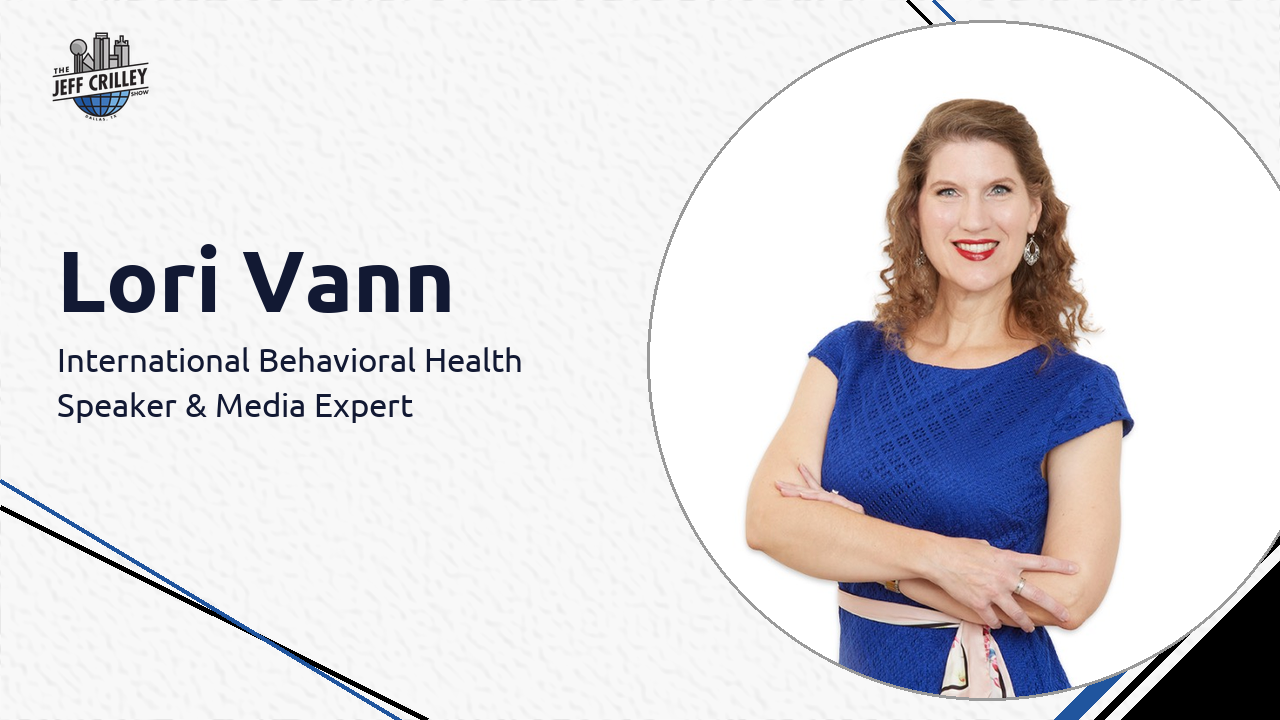
Behavioral health expert and author Lori Vann explains why the 37 forms of self-harm remain invisible to most clinicians, why AI chatbots are making things worse, and what twenty-six years of research have taught her about a condition more common than autism.
One Teen Became Two
Twenty-six years ago, a graduate intern in Texas sat across from a teenager who was hurting herself, and the intern realized she had no training for what she was seeing. Graduate school hadn't covered it. The textbooks hadn't covered it. And when that one teenager became two, and then the intern moved to the adult unit at Green Oaks Hospital and found grown men and women doing the same thing, she started keeping notes.
That intern was Lori Vann, who now runs the Institute for Non-Suicidal Self Injury, has written four books on the subject, and has appeared on Dr. Phil's stage in front of two thousand people from more than sixty countries. On a recent episode of The Jeff Crilley Show, she laid out a problem that most of the mental health field still isn't equipped to handle — and warned that artificial intelligence is making it worse.
A Gap in Graduate School
Vann's path into the field was accidental, born of necessity rather than academic planning. "They didn't cover this in graduate school. They still don't really cover this in graduate school," she told Crilley. After Green Oaks, she kept collecting data, doing research, giving talks, and fielding media requests. By 2014, she decided the gap in professional knowledge had persisted long enough. "There's such a need, it's time to write the first of the four books that I've written on the topic," she recalled.
That first book, *A Caregiver's Guide to Self Injury*, was designed to be grabbed during a crisis. "When someone needs it, they're gonna be in crisis, and they need to be able to go to that chapter in that moment and get the answers that they need," Vann explained. She filled it with questions collected from keynote audiences, mistakes she'd heard other counselors making, and things her own clients wished people understood about why they did what they did.
Thirty-Seven Forms, One Blind Spot
The popular image of self-injury — small cuts on a teenager's wrist — accounts for only a sliver of the behavior Vann encounters. "There's 37 different forms of self injury I've tallied, so it's so much more than just cuts," she said. Some clients hit themselves. Others bite their own lips, tongues, or cheeks. Many never think of what they're doing as self-injury because it doesn't match the stereotype.
"I assess for it with every single client. I never assume someone's not done it because statistically speaking, it's an epidemic," Vann said. "Lifetime risk in the US is probably conservatively thirty percent." She let that number land. "It's more common than autism. It's more common than childhood cancer. It's just so heavily stigmatized that people have a history of it but they're scared to disclose it."
Adults, she said, often come in for other issues entirely. "We'll start talking about examples and they go, 'Well, actually, now that you mention it, I did used to do that,' or 'Well, I do this behavior, but I've never thought of it in terms of self injury because it wasn't the stereotypical form of it.'" The intent, Vann insisted, is what matters — not whether the behavior matches a textbook image that most textbooks never printed in the first place.
Not Suicide, But Connected
Vann was emphatic about a distinction she considers critical: self-injury is not a suicide attempt. "Self injury is not suicide and I really like to emphasize that," she said. But the two are linked. Over sixty-five percent of people who engage in self-injury also experience suicidal ideation. "That's where suicide prevention starts, with self injury identification and intervention and prevention techniques, but it's not a suicide attempt and everyone needs to ask the intent, not assume behind it."
She drew parallels to disordered eating — another behavior rooted in control. "It's the sense of everyone else is calling the shots. I feel like I don't have control in my life, but what I do to my own body, I have control over that," she said. In her second book, *The Practitioner's Guide to the Treatment of Self Injury*, she identified at least five things eating disorders and self-injury have in common. And she pushed back on the double standard: "We don't judge people that use substances, and we don't judge people that struggle with disordered eating, so why are we so judgmental on self injury? Is it because the scars are on the outside versus internally?"
AI as Counselor, AI as Risk
The conversation took a darker turn when Crilley asked about artificial intelligence. Vann didn't mince words. "I know a lot of people have started to go to AI for counseling instead of going to an actual human being, and I do believe that that's a very dangerous thing to do because, again, it's going to validate. It's going to tell you what you want to hear," she said.
She cited at least two active lawsuits involving individuals who took their own lives after AI validated their suicidal thinking. "One of them, I believe, was an adolescent and one was an adult male," she said. "And I know that we're gonna have tons of other cases like that." The core problem, as Vann described it, is that AI lacks context. It cannot see a person in real time, cannot read body language, cannot know that a client asking about weight loss may be deep in disordered eating. "AI does not have context for who the human being is," she said.
A Stigma Bigger Than the Behavior
What Vann's twenty-six years of clinical work and research point to is a compounding failure: a behavior affecting nearly a third of the population, a training pipeline that ignores it, and a stigma that keeps those who suffer from ever raising their hand. The result is a crisis hiding in plain sight — in school nurse offices, in therapy sessions about other issues, in the quiet habits people never name.
Vann now offers counseling in Texas and coaching services for self-injury nationally and internationally. She trains treatment facilities and school districts to identify and respond to the behavior before it escalates. The Institute for Non-Suicidal Self Injury provides free and low-cost resources through its website, YouTube channel, and social media.
What She Wants Caregivers to Hear
At the close of the interview, Crilley asked Vann to speak directly to a parent who has just discovered their child is self-harming. She looked into the camera and said: "It's treatable, and I know it's a scary thing. I know that there's no book that prepared you for this. You're not alone. There are so many people that find themselves in your position, but there really is help, there is hope. This is a behavior that can be successfully treated."
Lori Vann is an international behavioral health speaker, media expert, and founder of the Institute for Non-Suicidal Self Injury. She is the author of four books on non-suicidal self-injury, including A Caregiver's Guide to Self Injury and The Practitioner's Guide to the Treatment of Self Injury. Learn more at lorivann.com. This episode was recorded at the studio of The Jeff Crilley Show.
Key Topics
- the 37 forms of self-injury beyond cutting
- self-injury versus suicide — asking about intent
- social media's role in teen self-harm
- the dangers of AI chatbots replacing human counselors
- parallels between self-injury and disordered eating
- the stigma keeping people from disclosing self-harm
- the Institute for Non-Suicidal Self Injury
Episode Timestamps
- 01:21 – Jeff introduces Lori Vann and her 26-year career in self-injury work
- 02:46 – Over 30 reasons people self-harm — and why each episode is different
- 03:27 – Self-injury is not suicide: the 65% correlation with suicidal ideation
- 04:50 – Lifetime self-injury risk in the U.S. is conservatively 30 percent
- 06:08 – Self-injury as a self-soothing mechanism and its parallels to eating disorders
- 08:13 – Dr. Phil clip: social media as an instant report card driving self-harm
- 10:22 – Context on Lori's Dr. Phil appearance at a 2,000-person international event
- 11:10 – A Caregiver's Guide to Self-Injury — writing a crisis-ready book
- 12:32 – AI chatbots validating suicidal ideation: lawsuits and real dangers
- 14:48 – Lori's message to caregivers: it's treatable and you're not alone
Watch, Listen & Connect
Subscribe for more episodes!
Episode Chapters
- 00:00 – Introduction
- 01:21 – Meet Lori Vann: Self-Harm Expert
- 01:48 – How Lori Became a Self-Harm Specialist
- 02:43 – Why People Engage in Self-Harm
- 03:31 – Self-Harm vs. Suicide: Key Differences
- 04:15 – Who Seeks Help and How It's Identified
- 05:54 – Self-Harm as a Coping Mechanism
- 08:13 – Dr. Phil Clip: Social Media and Self-Harm
- 10:16 – Behind the Scenes of the Dr. Phil Moment
- 10:51 – A Caregiver's Guide to Self-Injury Book
- 12:23 – The Dangers of AI as a Counselor
- 14:08 – How to Work With Lori Vann
- 15:04 – A Message of Hope for Caregivers