The Handwriting Expert Who Read 56 Oscar Nominees and Found the Same Hidden Fear
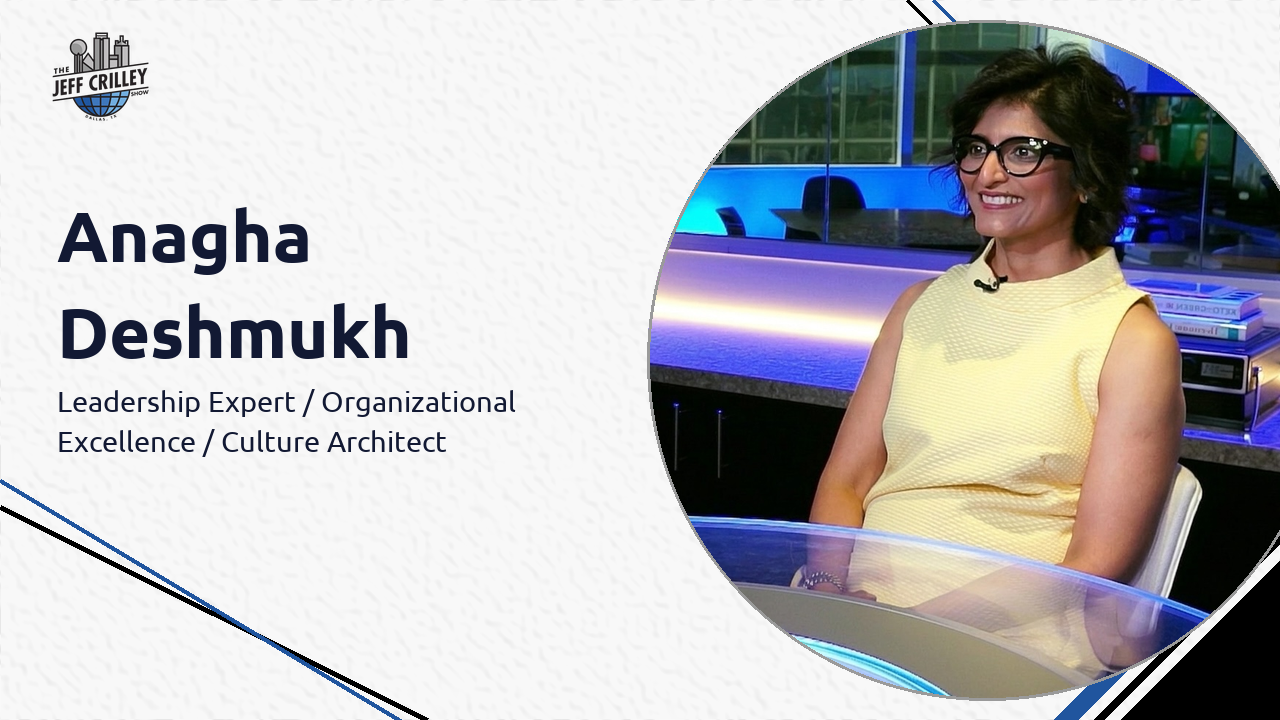
Anagha Deshmukh, a 23-year electrical engineer turned leadership and handwriting analyst, explains how the strokes on a page can reveal what boardrooms and hiring managers keep missing.
53 Out of 56
Last month, Anagha Deshmukh sat down with the handwriting samples of 56 Oscar nominees. She wasn't looking at their filmographies or acceptance speeches. She was studying the pressure of their pen strokes, the spacing between letters, the way certain loops curved or didn't. Out of those 56 samples, 53 revealed the same buried trait: a fear of criticism of their looks.
"Handwriting tells you what is invisible," Deshmukh said. "I looked at their handwriting and each one of them had that trait." The finding is counterintuitive — these are among the most publicly admired people on the planet — but it illustrates the central premise of Deshmukh's work: what holds people back is rarely visible on a résumé, a reel, or even across a conference table. It shows up, she argues, in the way they write.
From Engineer to Analyst
Deshmukh spent 23 years as an electrical engineer in corporate America, leading global teams across multiple countries. The shift toward handwriting analysis didn't come from a self-help retreat or a career coach. It came from a board meeting.
"I was in a board meeting once, and they were asking for data," she told Jack Canfield on his show Success Today. "And then they asked for more data. And then they asked for some more data. And, really, at the third time, it was very apparent. It was not the data that was lacking. It was something that was holding people back with that was within their personalities. It was the limiting traits that people had within their personalities."
That realization — that the obstacle wasn't informational but personal — redirected the arc of her career. She trained in the science of graphology, eventually building a firm with a team of analysts who decode personality from pen strokes. "At a boardroom level, you can't tell people, hey. You know, you have fear of failure. You can't do this," she explained. "So I have a system that helps people understand what's holding them back."
The Board Meeting That Changed Everything
Deshmukh described the core problem with striking precision during her appearance on The Jeff Crilley Show. Boards repeatedly delay decisions not because they lack information, but because certain members' thinking patterns demand more data than any deck can satisfy. "Typically, they're like, Okay, I didn't get enough data today. Let's reschedule the board meeting," she said. "Let's have this one more time. Let's discuss it in the next board meeting and then let's approve the capital. And then they're thinking, Yes, capital is going be approved, that board meeting comes and then again it is postponed and they don't have enough data."
She maps thinkers into three categories. The first is the tennis player — fast, reactive, able to address problems on the fly. The second is the scale, an analytical mind always weighing pros and cons. The third is what she calls ducks in a row, a process-oriented thinker. "Every company needs all these thinkers," Deshmukh said, "but in C suites, they don't understand who's thinking how."
Once her team identifies those patterns through handwriting samples collected before a retreat, the dynamics shift. "You don't need three board meetings. You can get it done in just one board meeting and that's how powerful this is," she said.
Building Handle.fyi
Today, Deshmukh runs her firm primarily for small business owners, a deliberate choice rooted in where the stakes are highest per person. "In small business, you might have 10 employees or 100 employees, maybe 500 employees," she said. "But that's really critical. Each member of that team is a contributor." Larger companies can absorb a few passengers. Smaller ones cannot.
Her work splits into two tracks: pre-hiring assessments that evaluate role fit and culture fit through handwriting samples, and leadership acceleration retreats where C-suite teams learn why they think the way they think. Before each retreat, her analysts pore over every executive's handwriting, mapping thinking patterns, innate strengths, and the limiting traits no one has named aloud. "We go through what are your thinking patterns, what are your innate strengths that the team doesn't know about, why you think the way you think," Deshmukh explained.
The handwriting work also extends beyond diagnosis. Deshmukh maintains that deliberately changing one's handwriting can rewire personality traits. She pointed to her work with Jack Canfield, the Chicken Soup for the Soul co-creator, as proof of concept. "At the age of 81 years old, he actually practiced it every day consistently over a month," she said. "And he saw some great results, and he saw results on his Whoop device."
Culture as the Last Differentiator
Deshmukh frames her work against a specific anxiety: the flattening effect of AI on corporate identity. "With AI, everything is going to look the same," she said. "All the companies eventually will look the same. Their marketing tactics will be the same, HR will be the same. Anybody can go on AI and say, hey, build out a resume or a job description for so and so. So things are going to start looking more and more generic."
What remains, in her view, is culture — and culture is built person by person. "What's going to be left for companies to differentiate themselves is going to be their fabric or their culture. And culture is really made of the people you hire," she said. "That is why it's really important to hire for personality and for culture versus just for skill sets. Because skill sets are going to be the same very soon." She launched her podcast, Boardroom Breakthroughs, in June 2025 to carry that message to C-suite listeners navigating the same uncertainty.
What the Invisible Says
Deshmukh put the philosophy simply during the interview, in a line that doubles as a kind of company motto: "What you can see from handwriting is really what the invisible says." For the growing roster of small businesses and leadership teams who bring her in, that sentence is less a tagline than a working theory — one that starts with a pen, a blank page, and the assumption that the most important data in any boardroom has been hiding in plain sight.
Anagha Deshmukh is a leadership and handwriting expert and the host of the Boardroom Breakthroughs podcast. Learn more at handle.fyi. This story was produced from her appearance on The Jeff Crilley Show, recorded at the Real News Communications Network studios in Dallas.
Key Topics
- handwriting analysis for hiring
- the three types of thinkers
- role fit vs. culture fit
- leadership acceleration retreats
- rewiring personality through handwriting
- Jack Canfield signature coaching
- Oscar nominees and fear of criticism
- the Boardroom Breakthroughs podcast
About the Guest
Anagha Deshmukh is a leadership expert, culture architect, and certified handwriting analyst. A former electrical engineer with 23 years of corporate experience leading global teams, she now helps small business owners and C-suite executives make faster, smarter hiring decisions and accelerate leadership performance through handwriting analysis. She hosts the Boardroom Breakthroughs podcast and has worked with notable figures including Jack Canfield.
Episode Timestamps
- 01:13 – Introduction: Handwriting as a hiring shortcut
- 01:52 – Handwriting is a printout of what's going on in your brain
- 02:29 – Hiring for sales: role fit and culture fit
- 03:38 – Why culture will differentiate companies in the AI era
- 04:49 – Working with small businesses and why every hire matters
- 05:59 – Leadership retreats: analyzing C-suite thinking patterns
- 06:43 – The three types of thinkers: tennis player, scale, and ducks in a row
- 08:30 – Jack Canfield clip and boardroom breakthrough origin story
- 10:28 – Coaching Jack Canfield to elevate his signature
- 11:40 – Oscar nominees: 53 out of 56 shared one hidden fear
- 12:57 – Boardroom Breakthroughs podcast for C-suite leaders
Watch, Listen & Connect
Subscribe for more episodes!
Episode Chapters
- 00:00 – Introduction
- 01:14 – Meet Handwriting Expert Anagha Deshmukh
- 01:52 – How Handwriting Reveals Personality Traits
- 02:30 – Hiring the Right Talent Through Handwriting
- 03:38 – Why Company Culture Will Define the AI Era
- 04:49 – Working with Small Businesses and C-Suites
- 06:37 – Three Types of Thinkers in the Boardroom
- 08:31 – Jack Canfield and the Power of Changing Your Signature
- 11:37 – Can Changing Your Handwriting Change Your Personality?
- 12:00 – Oscar Nominees and Fear of Criticism
- 12:38 – The Boardroom Breakthrough Podcast
- 14:20 – Final Thoughts and How to Connect